
Upload a photo
PNG, JPG or WebP · up to 10 MB
Choose a photo to generate a video.
Stay seated while your double dances
Make a Teach Me How to Dougie video from one photo: stay seated at a table while a translucent double dances behind you. Try the ghost-dance effect on ReelAI.
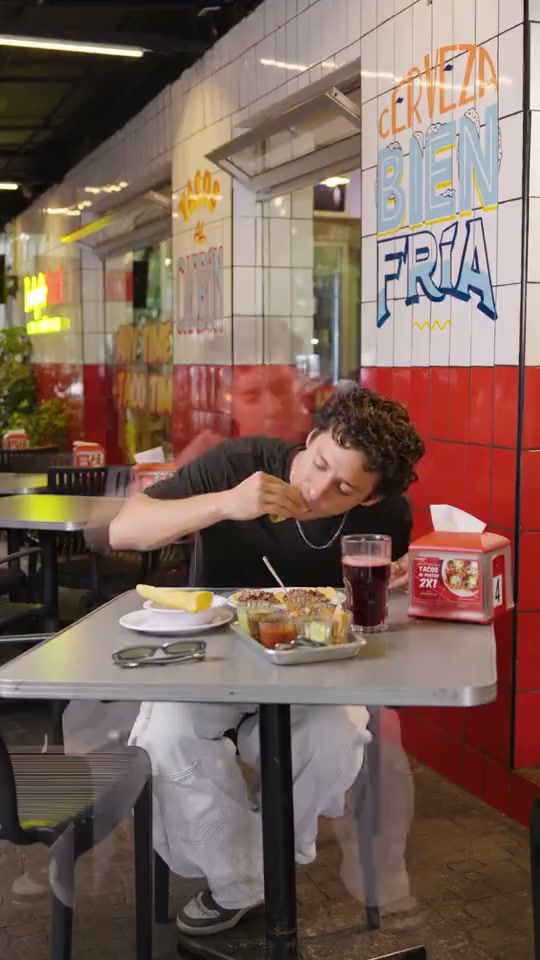
Teach Me How to Dougie turns one photo into a ghost-dance scene: your seated self barely reacts while a see-through double dances behind you. The inspiration shows a man eating at a restaurant table, with translucent copies moving behind and around his chair. ReelAI narrows that layered reference to one seated subject and one dancing double, keeping the food and foreground calm while the copy supplies the energy. It is an imagined duplicate from the same photo, not a second person assembled from another upload.
Best for
- Use the effect for a lunch-break reaction
- an unbothered mood or a quiet-versus-chaotic meme. The contrast reads best when the main character has a simple seated action and the double has open floor space behind them. An already composed dining scene gives the most direct starting point.
Create your Dougie double
Choose your photo
Upload one photo of a single person at a table with the face and upper body clear. Leave some space above the shoulders and beside the chair for the double. A standing portrait can provide the appearance, but a prepared seated restaurant or kitchen image gives firmer control over the meal, chair and setting. Do not combine two unrelated people into the input.
Generate with the template
Use the prepared contrast between a calm seated lead and one energetic, see-through copy in the background.
Review and download
Check that the foreground person keeps their appearance while the double remains recognizably the same character. Look for stable plates, table edges and hands, plus a consistent translucent body rather than flickering fragments. The background figure should stay behind the seated lead instead of crossing through their face or food.
Dancing-double direction
Use this reference direction as a starting point in custom-prompt mode. The template runs fixed instructions; remixing is a separate workflow, not an edit to the preset.
Use the uploaded image to preserve the appearance of one seated person at a restaurant or kitchen table. Keep their face, hairstyle and clothing recognizable. Retain the existing table and food if present; otherwise establish a simple table scene without detailed lettering. The foreground person calmly lifts a small bite or makes a restrained head nod. Behind the chair, introduce one semi-transparent duplicate with the same face, hair and outfit. Have that duplicate perform relaxed shoulder rolls, a single arm sweep and soft knee bounces in place, with coherent legs and hands. Keep the foreground subject opaque, the double translucent and the camera fixed. Maintain clear separation between the two figures without face overlap, body merging, extra copies, cuts, captions or song lyrics.
Before you create
Do I need a second photo for the dancing double?
No. The preset uses one photo and asks the model to imagine a translucent copy of that subject. It does not combine two identities or transfer a dance recording. This version focuses on the seated-person and dancing-double contrast; the original song and a frame-for-frame Dougie performance are not included.
Can I change the creative direction?
The preset uses fixed instructions. Copy the reference direction into custom-prompt mode to adapt it; this does not change the preset itself.
What video output should I expect?
The default length is 12s (reference ratio 540/960). The output follows your uploaded photo's aspect ratio and suits Use the effect for a lunch-break reaction, an unbothered mood or a quiet-versus-chaotic meme. The contrast reads best when the main character has a simple seated action and the double has open floor space behind them. An already composed dining scene gives the most direct starting point..
Let your double do the dancing
Start with a seated portrait or a prepared table scene and give your background double the spotlight.